SKBBK / LINDUNG 24 JAM: What HR Needs to Know
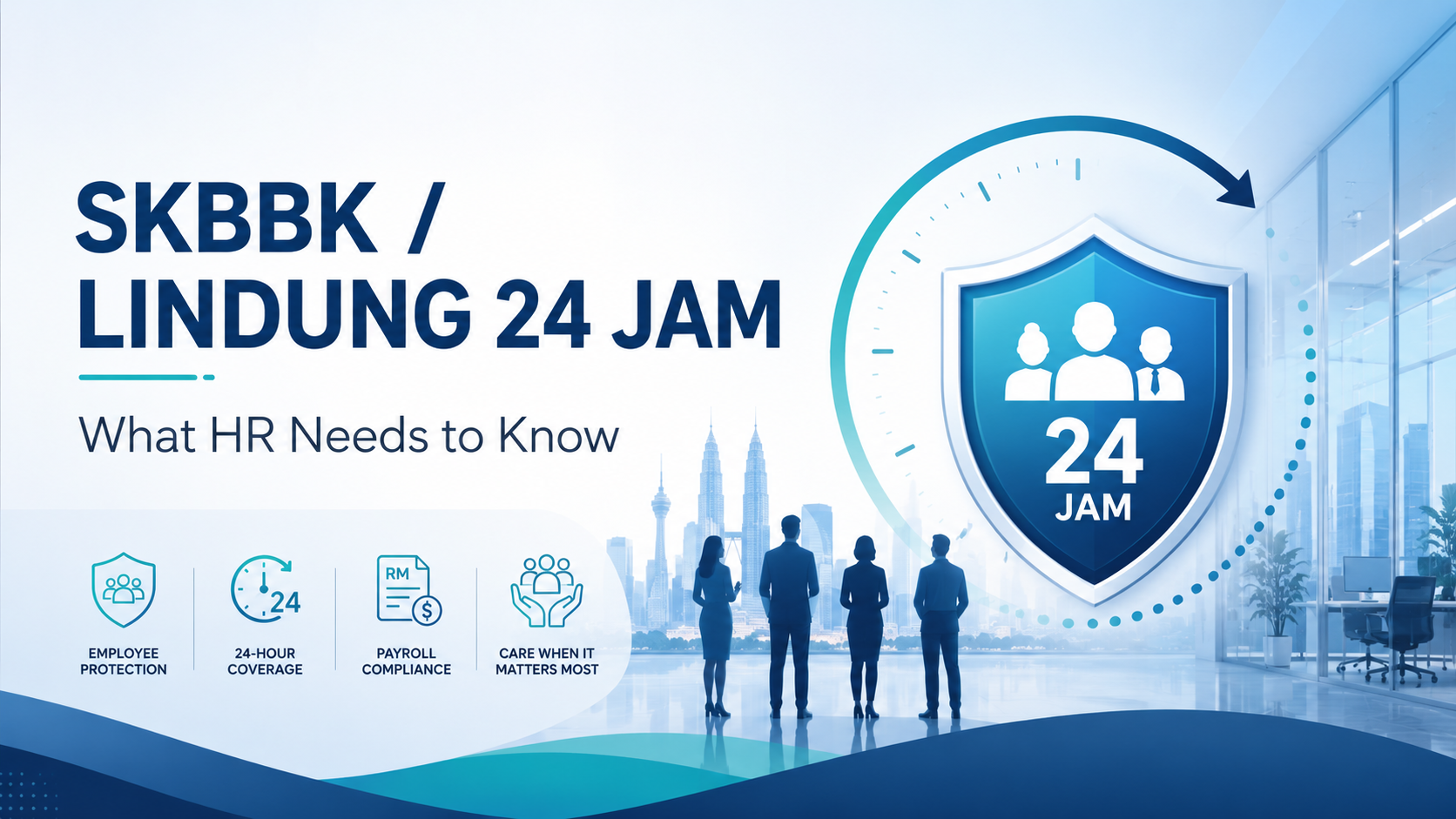
SOCSO protection is expanding with SKBBK, also known as LINDUNG 24 JAM. This scheme gives eligible employees additional protection for certain accidents that happen outside working hours.
For HR and payroll teams, the main points to understand are simple: what it covers, who pays, how payroll is affected, and what employees should be told.
Quick Summary
| Key Point | Simple Explanation |
|---|---|
| Scheme name | SKBBK / LINDUNG 24 JAM |
| Managed by | PERKESO / SOCSO |
| Purpose | Additional protection for certain non-work-related accidents |
| Contribution | Fully borne by the employee |
| HR impact | Payroll setup, employee communication, and contribution records |
| Important note | Coverage is subject to PERKESO rules and exclusions |
What Is SKBBK / LINDUNG 24 JAM?
Normally, SOCSO mainly protects employees for work-related accidents, such as accidents at work or while travelling to and from work.
SKBBK / LINDUNG 24 JAM adds another layer of protection. It may cover eligible employees for certain accidents that happen outside working hours and are not directly related to work.
However, HR should explain this carefully. It does not mean every accident is automatically covered. Claims are still subject to PERKESO’s assessment.
Normal SOCSO vs SKBBK
| Normal SOCSO Coverage | SKBBK / LINDUNG 24 JAM |
|---|---|
| Covers work-related accidents and occupational diseases. | Covers certain non-work-related accidents. |
| Example: workplace accident, commuting accident, or work-related travel. | Example: accident outside working hours, subject to PERKESO rules. |
| Existing SOCSO contribution applies. | Additional employee-borne contribution applies. |
| Claim approval by PERKESO. | Claim approval by PERKESO. |
Who Pays for the Contribution?
The SKBBK contribution is fully borne by the employee.
However, the employer is responsible for paying the contribution on behalf of the employee while the employee is still employed.
This means HR and payroll teams must make sure the payroll system is ready to calculate and process the contribution correctly.
Contribution Rate
| Phase | Rate |
|---|---|
| Phase 1 | 0.75% |
| Phase 2 | 1.00% |
| Phase 3 | 1.25% |
HR should communicate this clearly to employees, especially if they notice a new deduction in their payslip.
What Is Not Covered?
SKBBK does not cover every situation. Examples of exclusions include:
- Accidents outside Malaysia
- Illness-related conditions
- Self-employment injuries covered under Act 789
- Domestic injuries covered under Act 838
- Certain foreign worker cases involving pass or permit violations
Because of this, HR should avoid saying “everything is covered 24 hours”. A safer explanation is: eligible accidents may be covered, subject to PERKESO rules and approval.
Payroll teams should review their payroll system to make sure the latest wage ceiling is applied correctly.
HR Action Checklist
Before implementation, HR should check:
- Payroll system is updated for the latest SOCSO wage ceiling
- Payroll system can support SKBBK contribution
- Employees are informed about the employee-borne contribution
- HR explains the coverage clearly without overpromising
- New employees are registered with PERKESO on time
- Payroll and contribution records are properly kept
- HR refers to official PERKESO guidelines for the latest updates
Simple Message HR Can Share with Employees
“SKBBK / LINDUNG 24 JAM is an additional PERKESO protection scheme for eligible employees. It may cover certain accidents outside working hours, subject to PERKESO rules and approval. The contribution is borne by employees and processed through payroll.”
Key Takeaway
SKBBK / LINDUNG 24 JAM gives eligible employees wider protection beyond normal work-related SOCSO coverage.
For HR, the key action is to prepare payroll, explain the new contribution clearly, and make sure employees understand that coverage is still subject to PERKESO rules and exclusions.
HR Compass Reminder
This article is for general HR knowledge sharing. Employers should always refer to PERKESO’s official guidelines before making final payroll or contribution decisions.